

Children's Eye Exams
Support your child’s vision, learning, and development with a comprehensive eye exam.

Support your child’s vision, learning, and development with a comprehensive eye exam.
According to the American Optometric Association (AOA), clear vision is essential for academic success. Reading, writing, using technology, and participating in sports all depend on strong visual skills.
Unfortunately, vision problems in children are more common than many realize — affecting up to 1 in 4 kids. Left untreated, these issues can lead to difficulties in reading, writing, and classroom performance that are often mistaken for attention or learning problems.
The AOA and our optometrists recommend comprehensive eye exams for children at:

Annual pediatric eye exams are the best way to detect vision problems early, before they interfere with schoolwork or self-confidence. Pediatricians may provide basic screenings, but only a comprehensive eye exam can uncover the full range of issues, from nearsightedness and eye alignment problems to focusing or tracking difficulties.
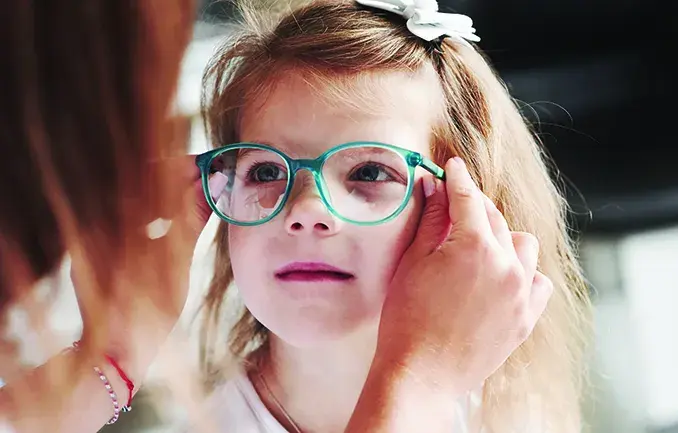
If you notice any of these signs, don’t wait — early intervention can make a lifelong difference.
If it's your child's first exam — or if you're just not sure what to expect — here's a look at what a typical visit involves. Our optometrists are experienced with patients of all ages, including those who can't yet read a chart.
1. Health & Vision History
We'll start by asking about your child's health, any vision concerns you've noticed, and your family's medical history. This helps us personalize the exam from the start.
2. Vision & Eye Health Evaluation
We'll perform a complete, child-friendly eye exam to evaluate how clearly your child sees, how well their eyes work together, and whether their vision is developing properly. We'll also assess overall eye health to help support learning, reading, sports, and everyday activities.
3. Prescription & Next Steps
If correction is needed, we'll discuss the best options for your child — whether that's glasses, contact lenses, or a follow-up care plan.
At MyEyeDr., we make it simple to protect your child’s vision and learning. We welcome all insurances and have convenient locations to make scheduling a kid’s eye exam an easy step toward ensuring your child sees and learns at their best.
A comprehensive children's eye exam evaluates the full range of visual skills and eye health—including focusing, tracking, and depth perception. A school vision screening only checks basic distance vision and may not detect conditions like lazy eye (amblyopia), crossed eyes (strabismus), or focusing difficulties—all of which directly affect how a child reads and learns. Children occasionally pass a school screening but could still have untreated vision problems.
Yes — children's comprehensive eye exams do not require a child to read or respond verbally. Optometrists are trained to examine patients of all ages. For children, our optometrists use specialized techniques such as picture-based eye charts and objective testing to accurately assess vision without relying on verbal answers from the child.
The most common vision problems diagnosed in children during a comprehensive eye exam are myopia (nearsightedness), hyperopia (farsightedness), astigmatism, amblyopia (lazy eye), and strabismus (eye misalignment). Many of these conditions develop without obvious symptoms and are often noted during a comprehensive annual eye exam—which is why regular exams matter even when a child isn't complaining about their vision.
Yes. Many childhood vision problems develop gradually and without obvious symptoms. Children often adapt to blurred or unbalanced vision without realizing anything is wrong, which means they may not complain even when a problem exists. Annual comprehensive eye exams are the only reliable way to detect issues like nearsightedness (myopia), lazy eye (amblyopia), or focusing difficulties before they begin to affect reading, learning, and academic performance.
The American Optometric Association recommends a child's first comprehensive eye exam at 6 months, a second at age 3, and another before starting kindergarten. After that, children should be examined every year. Early exams matter because conditions like lazy eye (amblyopia) and crossed eyes (strabismus) are significantly easier to treat when caught during the early years of visual development.
After the exam, your optometrist will explain all findings, discuss any prescription needs, and recommend a follow-up schedule. If glasses or contact lenses are needed, our eyewear experts can help you find the right fit for your child.
MyEyeDr. welcomes all insurances, and most vision insurance plans cover annual comprehensive eye exams for children. Many medical insurance plans also cover eye exams when a specific condition is being evaluated. Bring your insurance card to your appointment and our team will help you understand your benefits before your visit.